Syremont Cultural Heritage Infrastuctures


Location: National Museum of Science and Technology Leonardo da vinci Via San Vittore, 21 – Milan, Italy
Committee: Agorasophia s.r.l.
Financing: private
Inauguration Date: November 12, 2011 / March 20, 2012
Further Information: http://www.museoscienza.org/eureka/default.asp
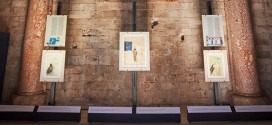
Description: scientific exhibition dedicated to the history and intuition of Archimedes.
Intervention Objective:
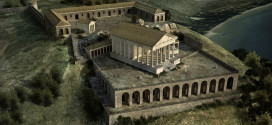
The exhibition represented a preview of Italy, the journey in the history of science devoted to Archimedes, the father of the ancient science of the Hellenistic era.
Agorasophia s.r.l., owner of the collection, has chosen the prestigious National Museum of Science and Technology Leonardo as a place for the world premiere, exposing part of which is now housed at the Museum of Archimedes called ARKIEMEDION, located in the hometown of Syracuse Archimedes.
The exhibition opened in Milan to a happy season of other similar exhibitions later hosted by the Museum of Rome and the Explora Park Overseas Rimini (still in progress). Each exhibition has focused learning path based on selected themes based on the kind of audience.
The exhibition at the National Museum of Science and Technology Leonardo was the most complete and articulate and has benefited from the collaboration of experts in communication and museology of the hosting museum.
EUREKA! THE BRILLIANT INTUITIONS ARCHIMEDES allows for the experiment of the public’s ability to participate in an interactive way with kinds of scientific exhibitions whose design complexity arises primarily from the ability to engineer objects subjected to continuous mechanical stress and unpredictability.
This exhibition offered to a wider audience the opportunity to discover (or rediscover) the areas of research in which he has experimented Archimedes – hydrostatics, mechanical engineering, geometry, math, physics – allowing you to experiment interactively with the principles that were based on Archimedes’ intuition and theoretical formulations that have laid the groundwork for future studies.
The exhibition is rich, immersive for the visitor thanks to activities that complement and supplement the experimental dimension of the exhibit, calling the visitor to read, to listen, to observe and to test
Museographic design and museology:
- studies on the exhibition subjects
- processing content (textual and iconographic)
- visual identity and communication
- exhibition design and interior fit out
- interactive exhibits design;
- scientific simulation software for the study os scientific phenomena
- scientific workshops
- staff training to support the educational activities
- training of technical personnel for routine maintenance of all equipment provided
-
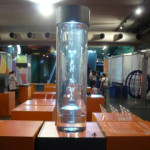
- Interactive exhibit – Oltremare Rimini

-

- Interactive exhibit – Genova